

Giant canal to bypass the Strait of Hormuz
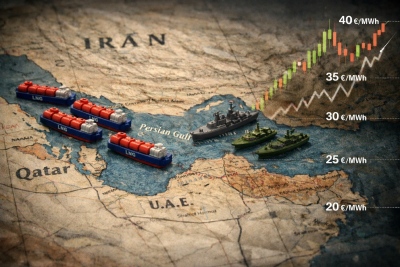
The rising tension in the Strait of Hormuz, through which approximately 20% of global maritime oil transport passes, brings back to the forefront an ambitious plan by Saudi Arabia that could radically alter global energy flows. Riyadh is reactivating the plan for the King Salman Canal, a giant infrastructure project that will connect the Persian Gulf with the Red Sea, completely bypassing the strategically vulnerable Strait of Hormuz. 
The project, estimated to cost up to $250 billion, is part of Saudi Arabia's ambitious Vision 2030 program, aiming not only to enhance the country's energy security but also to transform it into one of the most important global logistics and trade hubs between East and West. The proposed canal will be approximately 950 to 960 kilometers long and will cross Saudi territory from east to west, allowing the passage of large tankers and container ships without the need to pass through Hormuz. This initiative acquires particular significance at a time when navigation in the Persian Gulf is under increasing pressure due to geopolitical tension in the region.
The CEO of Saudi Aramco, Amin Nasser, warned that disruptions to navigation in the strait could have serious consequences for the global oil market and the global economy. "The longer the disruptions continue, the more devastating the effects will be for the energy market," he stated.


Pipelines already bypassing Hormuz
At the same time, certain energy infrastructures that bypass the Strait of Hormuz are already in operation. Among these: The Trans-Saudi Pipeline (East-West Pipeline), approximately 1,260 km long, which transports oil from the fields of the Eastern Province to the port of Yanbu on the Red Sea. Its maximum capacity reaches 5 million barrels per day. The ADCOP pipeline of the United Arab Emirates, which transports oil to the port of Fujairah in the Arabian Sea, with a capacity of approximately 1.8 million barrels per day. The Al Haba pipeline connecting the UAE with the port of Sohar in Oman. According to estimates by the International Energy Agency (IEA), these alternative routes can transport a total of 3.6 to 5.6 million barrels of oil per day, an amount corresponding to less than 30% of the normal flow through the Strait of Hormuz.
New projects and geopolitical challenges
In recent years, new pipeline projects have also been proposed, such as: a pipeline of approximately 650 km from Qatar to Oman, and a new branch of approximately 600 km towards the Gulf of Aqaba, near the Suez Canal. However, most of these projects remain at the planning stage. Meanwhile, increasing military tension in the region creates significant risks for energy infrastructure.
Risk to the global economy
Prolonged instability in the Persian Gulf could lead to severe consequences for the global economy. Disruptions in energy supply may affect many sectors, from aviation and shipping to agriculture and manufacturing. Some analysts even warn of the possibility of stagflation—a combination of low growth and high inflation—if the crisis is prolonged. In this context, projects like the King Salman Canal could provide long-term solutions, although their implementation remains uncertain.
www.bankingnews.gr









Σχόλια αναγνωστών